What If I Feel Nervous or Awkward About Starting Krav Maga?
Feeling nervous about starting Krav Maga is completely normal — and one of the most common things people mention before their first session at Krav Maga Auckland, a certified Krav Maga Global club on Auckland's North Shore. The training is structured to meet you where you are, the group is welcoming from session one, and the nervousness almost always disappears within the first few minutes of moving. Most people leave their first session wishing they'd started sooner.
Nervousness before starting something new is honest. It means you're taking it seriously. But it can also be the thing that keeps people from starting at all — and that's the part worth looking at directly.
Here's what's actually behind the nerves, and what the first session at Krav Maga Auckland really looks like.
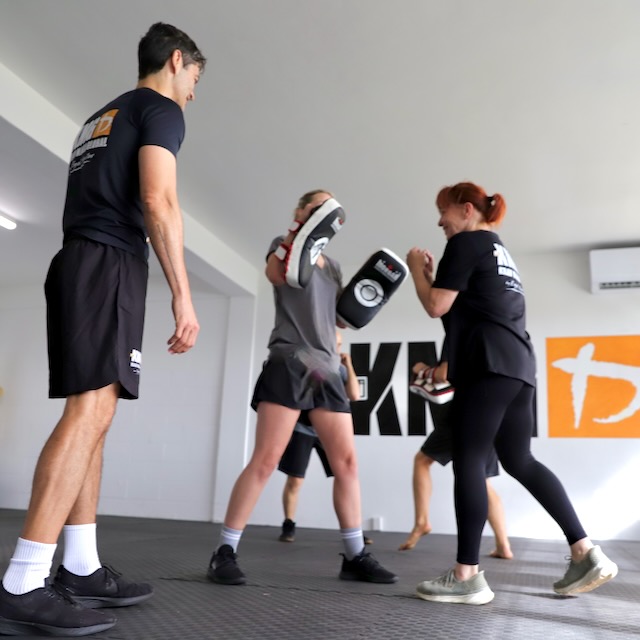
Instructor Brad coaching a trainee. Krav Maga Auckland, Birkenhead.
Is it normal to feel nervous about starting Krav Maga?
Yes — it's completely normal, and it's one of the most common things people mention before their first session. The nerves usually come from a few specific places: not knowing what to expect, worrying about fitness or ability, concern about whether the environment will feel intimidating, and uncertainty about fitting in with the group.
All of these are reasonable things to wonder about. Krav Maga training involves physical contact, unfamiliar movement, and working with people you've never met. Of course that feels slightly daunting before you've experienced it.
What most people find is that the nervousness is almost entirely pre-session. Once the warm-up starts and everyone is moving, the cognitive bandwidth for worrying runs out and you're just training. The group dynamic at Krav Maga Auckland is genuinely welcoming — people remember what it felt like to be new, and it shows.
What if I'm not fit enough to keep up?
Fitness is not a prerequisite for starting Krav Maga — it's a result of training it. Every person who trains at Krav Maga Auckland started somewhere. Many started with no prior training of any kind, at varying fitness levels and ages. Classes are well-paced, instructors adjust for individuals where needed, and you work at your own level within the structure of the session.
The honest reality is that the first few sessions are challenging — not because the instructors push people beyond their limits, but because using your body in new ways is genuinely tiring. That fades quickly. Within a few weeks of consistent training, what felt hard becomes manageable, and what felt unfamiliar starts to feel natural.
The Essentials Course is specifically designed for this — a structured entry point where you build from the ground up at a pace that makes sense for someone starting from scratch. For a detailed look at what the physical demand actually involves, see how intense Krav Maga training is for beginners.
Will the environment feel intimidating?
No — and this is one of the things people most consistently mention after their first session. Krav Maga Auckland is not a gym full of people showing off. It's a mixed group of working adults, parents, and people at different stages of their training — most of whom came in for the first time feeling exactly the same way you do now.
Instructor Aaron and Instructor Brad make a point of introducing themselves to every new person before training begins. You won't be left to figure it out alone. The group is welcoming in the way that people who genuinely love what they do tend to be — enthusiastic about the training, and glad to have someone new join.
There's no sparring in KMG training, which removes one of the biggest sources of anxiety for new trainees. Partner drills are controlled, instructors pair people thoughtfully, and the focus is always on learning — not performing. Imi Lichtenfeld, who founded Krav Maga, designed the system around the principle that it must work for ordinary people — and that philosophy shapes how training is run at every level.
"I've never been to any martial art classes before and with a bit of nervousness I attended my first class. I was amazed how friendly but professional the instructors are — other students are just like you and me."
— Chris, Krav Maga Auckland memberWhat if I feel awkward doing the techniques?
Everyone feels awkward at first — that's not a sign something's wrong, it's a sign you're learning something new. Krav Maga techniques are designed around natural human movements, which means they start to feel less foreign fairly quickly. But in the first session or two, there will be moments where you're not sure if you're doing it right, or where the movement feels unfamiliar.
That's completely fine. Instructors expect it, work with it, and adjust their coaching accordingly. The culture at Krav Maga Auckland is about getting better, not performing. No one in the room expects you to be polished in your first session — they expect you to try, pay attention, and keep going.
Most people are surprised by how quickly the techniques start to click. The KMG curriculum was built around movements your body can do under pressure, which means the learning curve is faster than most martial arts or self-defence systems.
What do the first few sessions actually look like?
Structure is reassurance — and classes at Krav Maga Auckland are well-structured from the first session. You'll be met at the door, given a brief rundown of what the session covers, and introduced to a training partner. The class begins with a dynamic warm-up, moves into technique instruction, then partner drills, and closes with a debrief from the instructor.
In the first session, the focus is on the foundations: stance, movement, basic strikes, and simple defensive responses. You'll leave having actually practised techniques — not just watched them. Most trainees walk out feeling more capable than they expected, and more comfortable in the environment than they thought they would be.
For a complete walkthrough of exactly how the hour runs, see what happens in your first Krav Maga class. If you want a structured entry point where you train with the same group each week, the Essentials Course is built specifically for that.
How do I know if Krav Maga Auckland is right for me?
The only way to know is to come in. Reading about the training gives you information — experiencing it tells you whether it's a fit. The trial session is specifically designed for people who are new and unsure, and there's no commitment beyond that first class.
Krav Maga Auckland trains on Auckland's North Shore at 47 Birkenhead Avenue, Birkenhead. The group includes people from their early 20s to their 60s, across a wide range of fitness levels, backgrounds, and reasons for training. If you've been thinking about starting and the nerves are the main thing in the way — that's exactly what the trial session is for.
Most people who come for a trial decide to continue. Not because of a sales pitch, but because the training is genuinely good and the group is worth being part of.
"Everyone who walks in for the first time is nervous. Everyone. The ones who've done martial arts before are nervous about looking like beginners again. The ones who've never trained are nervous about not keeping up. What I've never seen is someone walk out after their first session and say it was what they expected. It's always different — usually better."
— Instructor Aaron · KMG Expert Level 2 · Krav Maga Auckland, North ShoreWhat People Ask Before Their First Session
Very normal — and very common. Almost everyone who starts at Krav Maga Auckland arrives with some version of the same nerves: not knowing what to expect, worrying about fitness, wondering if they'll fit in. What instructors consistently see is that the nervousness disappears within the first few minutes of training. The warm-up gets you moving, the partner drills get you focused, and the cognitive space for worrying runs out quickly.
Krav Maga Auckland trains people at a wide range of fitness levels — from competitive athletes to people who haven't done any physical training in years. Classes are well-paced and instructors adjust for individuals where needed. The first session is challenging, but it isn't designed to break you. Fitness improves as a natural side effect of consistent training, and the Essentials Course is a particularly good entry point because it builds progressively from the ground up.
No. There's no sparring in KMG Krav Maga training. Partner work is controlled and technique-focused — you're drilling responses with a partner, not competing against them. Instructors pair trainees thoughtfully, especially for new students. The focus in early sessions is entirely on building correct movement and technique — nothing that resembles a fight, and nothing you'll be thrown into unprepared.
Krav Maga techniques are built around natural human movements and gross motor skills — not athletic ability or coordination. The system was designed to be accessible to anyone, including people who've never trained in any sport or martial art. Coordination improves with repetition, and the training provides plenty of it. You don't need to arrive coordinated — you develop it through the training itself.
Start by reading the North Shore classes page so you understand how the training works and what to expect. The nervousness doesn't go away by reading forever — it goes away by experiencing that the reality is more welcoming than the anxiety suggested. If you want a structured starting point with the same group of people each week, the Essentials Course is designed for that. Either way, the first step is just turning up.
For most people, the pre-session nerves are largely gone after the first two or three classes — once you know the format, recognise the faces, and have a sense of what's expected. The deeper shift tends to happen somewhere around weeks four to eight, when showing up starts to feel like a default rather than a decision. That's the point where the nervousness has been replaced by something else: looking forward to it.
See How Classes Work First
Visit the North Shore classes page to understand the training, class structure, and next steps before booking.
View North Shore Classes47 Birkenhead Avenue, Birkenhead, Auckland 0626 · 027 214 9461