Martial Arts Auckland · North Shore
Martial Arts for Adults in Auckland:
Krav Maga for Real-World Self-Defence
Looking for martial arts in Auckland? At our Birkenhead gym on the North Shore, we teach practical Krav Maga self-defence to adults, and most members start with no prior experience. Whether you're training for fitness, confidence, stress relief, or real-world self-defence, classes are structured so ordinary adults can progress safely and quickly.
No experience needed. No commitment beyond the first class.
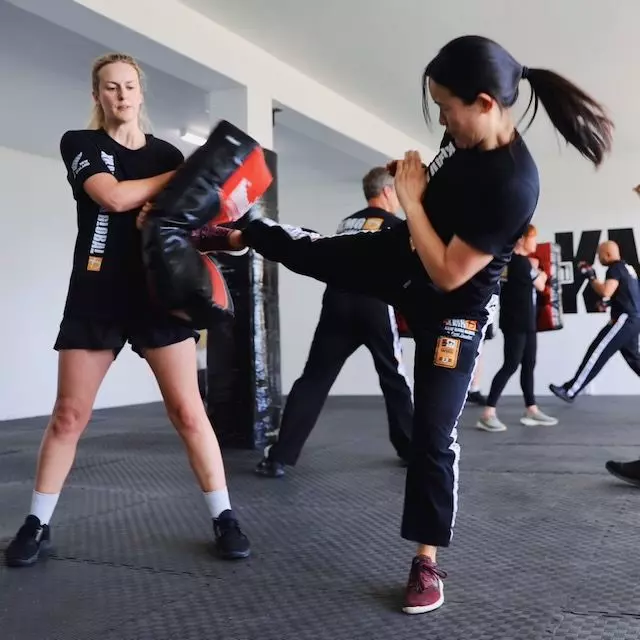
What Is Krav Maga Auckland? A Krav Maga Global-certified school at 47 Birkenhead Avenue on the North Shore, training adults in practical self-defence since 2015. If you're looking at martial arts in Auckland, this page covers what we teach, how it differs from traditional martial arts and combat sports, and how to come in for a trial.
What Martial Arts Options Are Available in Auckland?
Auckland has plenty of martial arts options: karate, BJJ, boxing, MMA, and more. Most of those are excellent at what they were designed for. The honest question is what you're actually trying to get out of training: fitness, sport competition, traditional discipline, or real self-defence skills you can use outside a gym.
If real-world self-defence is the priority, Krav Maga is the system that was built specifically for that job. It's not a martial art in the traditional sense and it's not a combat sport. It's a self-defence system, taught here under the Krav Maga Global curriculum used in over 60 countries. For a wider overview of how systems compare, read the national guide to the best martial art for self-defence.
Why Do Adults Start Martial Arts Training in Auckland?
Most adults looking at martial arts in Auckland are not trying to become professional fighters. They're usually looking for a practical, enjoyable way to improve fitness, confidence, resilience, and self-defence skills in a structured environment. Something that's mentally engaging and physically useful at the same time.
Some members join after years away from training. Others have never done martial arts before. Many are balancing work, family, and busy schedules and simply want something challenging and useful a few times a week. At Krav Maga Auckland, the majority of members are ordinary adults in their 30s, 40s, and 50s: professionals, parents, university students, healthcare workers, and people who simply want to feel more capable and confident.
The beginner classes are designed specifically so adults with no prior martial arts experience can start safely and build skills step by step without feeling thrown in at the deep end. Unlike many traditional martial arts classes for adults, Krav Maga training combines striking, movement, awareness, and practical self-defence into one integrated system designed for ordinary people rather than competition fighters. That makes it one of the most practical martial arts choices available to adults in Auckland who aren't looking to compete.
How Do I Get Started with Krav Maga in Auckland?
Most people go from first contact to first class in under a week. Here's what the process looks like.
Book a Trial Class
Pick any beginner session that works for you: Saturday morning, Monday or Wednesday evening. Online booking takes a couple of minutes.
Come to Birkenhead
47 Birkenhead Avenue, five minutes from the Harbour Bridge. Parking at Highbury Centre on Birkenhead Ave. Wear clothes you can move in.
Train with the Group
You'll fit straight into the regular beginner class. No martial arts experience needed. Many adult beginners start from zero and are surprised how quickly they pick it up.
Decide Where Next
Liked it? Talk to Aaron or Brad about joining the regular programme. No pressure, no contracts. Train at your pace.
Where Can I Train Martial Arts on Auckland's North Shore?
If you're searching for martial arts on the North Shore, Birkenhead is a practical base. It's five minutes from the Harbour Bridge, clear of city traffic, and easy to reach from Northcote, Glenfield, Beach Haven, Birkdale, Hillcrest, Takapuna, Albany, Forrest Hill, Milford, Devonport, and Greenhithe. Most regular members live on the Shore and train two or three times a week without it feeling like a long commute.
The gym is purpose-built for the kind of training Krav Maga involves: partner work, scenario drills, stand-up and ground techniques. Parking is available at Highbury Centre on Birkenhead Avenue (600+ spaces, 3-hour limit), at Birkenhead Square on Mokoia Road, and along Birkenhead Avenue. Evening and Saturday morning classes fall outside retail hours, so parking is typically easy to find.
North Shore · 5 minutes from the Auckland Harbour Bridge
Parking: Highbury Centre (Birkenhead Ave, 3hr), Birkenhead Square (Mokoia Rd), street parking
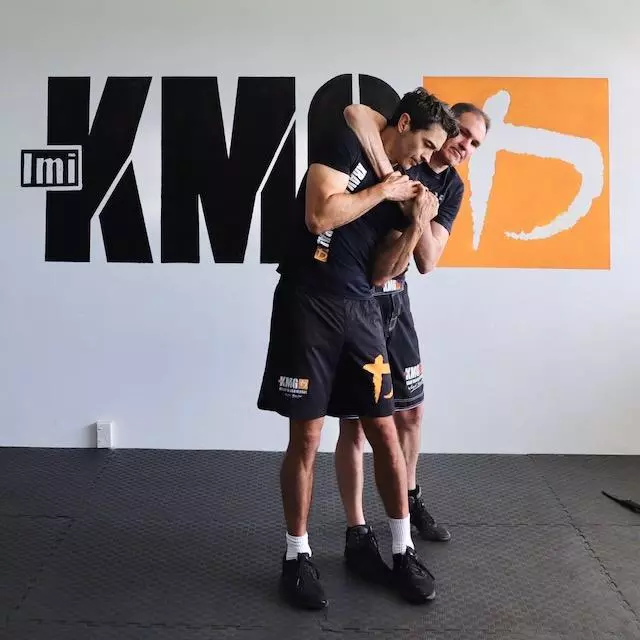
Real Training · Not a Demo
What Does a Krav Maga Class in Auckland Look Like?
Classes follow a consistent structure: warm-up, technique work, partner drills, and scenario training. You work with a partner, not against one. The focus is on doing the technique correctly under realistic conditions, not on outperforming the person next to you.
From your first session you'll be working on real scenarios: awareness, distance management, and how to respond when someone gets too close. Not forms. Not patterns. Not competitive sparring. Practical training that builds real capability from day one.
Instructor Aaron and Instructor Brad have been training Auckland students since 2015. Between them, more than 1,000 people have come through the doors, and most are surprised at what they can do from the very first class.
How Does Krav Maga Compare to Other Martial Arts?
A straightforward look at what each training style is genuinely good for, and where each one sits relative to real-world self-defence.
Traditional Martial Arts
Karate, Taekwondo, Kung Fu
- ✓ Excellent for discipline and focus
- ✓ Structured progression and belt system
- ✓ Good fitness and flexibility benefits
- ✗ Techniques formalised for competition, not civilian threats
- ✗ Limited grappling, ground defence, and multiple-attacker scenarios
- ✗ High time commitment before practical application
Best for: tradition, discipline, long-term study
Krav Maga
Practical self-defence · KMG certified
- ✓ Built for real civilian threat scenarios, not sport
- ✓ Covers strikes, grappling, weapons awareness, and de-escalation
- ✓ Well-paced from session one, no experience needed
- ✓ Practical skills develop quickly, not after years of drilling
- ✓ Works regardless of size, gender, or fitness level
- ✓ Awareness and avoidance taught alongside physical technique
Best for: real-world self-defence, adults starting from zero, practical skills fast
Combat Sports
Boxing, BJJ, MMA, Kickboxing
- ✓ Excellent for fitness and athletic performance
- ✓ Develops genuine striking or grappling skill
- ✓ Competitive environment with measurable progress
- ✗ Rules-based, designed for one-on-one sport scenarios
- ✗ Limited weapons defence and multiple-attacker training
- ✗ Higher injury rate as a contact sport with trained opponents
Best for: competitive sport, athletic training, ring performance
For a deeper comparison, including MMA and BJJ, see the national Krav Maga compared hub.
Why Krav Maga Works
Why Should I Train Krav Maga Instead of a Traditional Martial Art?
Most martial arts were built for a specific context. Karate evolved from Okinawan tradition. BJJ was built for one-on-one grappling competition. Boxing is a sport with defined rules and weight classes. They're effective at what they were designed for.
Krav Maga was designed for a different problem entirely: civilian self-defence in real-world situations, where threats are unpredictable, environments are unfamiliar, and there's no referee. The KMG system teaches you to read a situation before it escalates, de-escalate where possible, and respond effectively if it doesn't. Unlike many traditional martial arts classes for adults, Krav Maga combines striking, movement, awareness, and practical self-defence into one integrated system designed for ordinary people rather than competition fighters.
The result is practical capability that builds quickly, not after years of drilling forms. Here's what that looks like in practice:
- No forms, kata, or patterns to memorise: useful skills from your first class
- Covers the full threat range: awareness, de-escalation, and physical response
- Trained under stress through scenario-based drills that build real-world capability
- Effective regardless of size, strength, or athletic background
- Part of the global KMG system, the same training used in 60+ countries
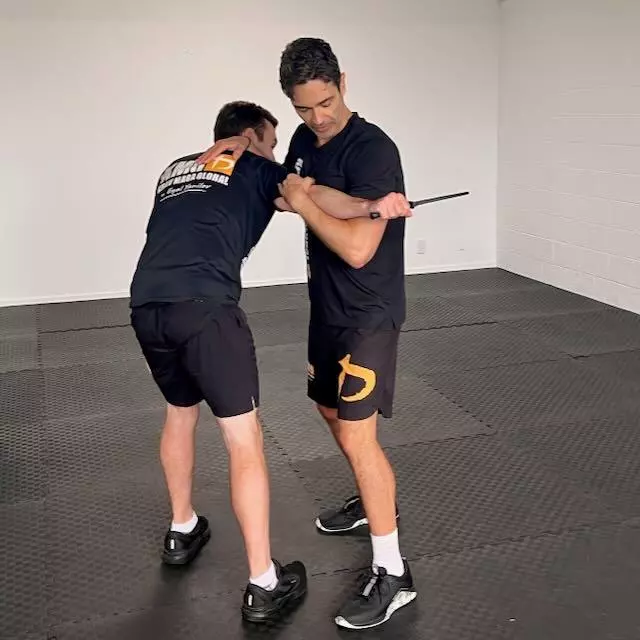
Who Trains With Us?
Complete Adult Beginners
Many members start martial arts for the first time in their 30s, 40s, or later. Classes are structured so adult beginners can integrate comfortably into the group from session one. No prior experience is expected and none is needed to keep up.
Busy Professionals
Many students work full-time and train two or three times a week, using Krav Maga for fitness, stress relief, confidence, and practical self-defence skills that fit around a normal life. Evening and Saturday morning classes fit around a working week.
Experienced Martial Artists
Some members come from karate, boxing, BJJ, taekwondo, or MMA backgrounds and use Krav Maga to add practical civilian self-defence training to skills they've already built. The KMG system complements rather than replaces existing training.
What Auckland Students Say About Krav Maga Training
"This is an amazing Krav school — linked in with the worldwide KMG network, so you can train anywhere. Fantastic instructors and group of people. Really valuable self-defence skills that are relatively easy to pick up."
"The teaching curriculum is very structured, organised and logical. Very practical, realistic and highly applicable — a genuine self-defence system."
"I've never been to any martial art classes before and with a bit of nervousness I attended my first class. I was amazed how friendly but professional the instructors are — other students are just like you and me."
Frequently Asked Questions: Martial Arts in Auckland
For practical, real-world self-defence, Krav Maga is the strongest option in Auckland. Traditional martial arts like karate build discipline and structure but weren't designed for civilian threat scenarios. Combat sports like BJJ and boxing develop athletic skill but operate within sport rules. Krav Maga was built specifically for self-defence: no rules, no ring, and no belt requirements before you can use what you've learned. At Krav Maga Auckland in Birkenhead, the KMG curriculum covers awareness, de-escalation, strikes, grappling, ground defence, and weapon threats, and you work on practical skills from your first session.
No. Krav Maga Auckland regularly trains adults in their 30s, 40s, 50s, and older, many of whom have never trained in any martial art before. The KMG system is designed around practical capability rather than athletic performance, which means it scales to your current fitness and mobility. You're not expected to kick head-height or have explosive speed. What matters is learning to apply technique correctly under realistic pressure, and most new members are surprised at how quickly they can apply what they learn, regardless of age.
No. You don't need any martial arts experience or a high level of fitness to get started. Complete beginners are the norm at Krav Maga Auckland, and the beginner sessions introduce the KMG curriculum step by step, so you're never thrown into advanced material before the foundations are solid. The warm-ups are paced for adults returning to exercise, the drills are partner-based rather than competitive, and Instructor Aaron and Instructor Brad work with your current level. Fitness improves through training, and many members find it becomes a natural side effect of something genuinely worthwhile.
Krav Maga Auckland trains at 47 Birkenhead Avenue, Birkenhead, five minutes from the Auckland Harbour Bridge and central to most of the North Shore, including Northcote, Glenfield, Beach Haven, Birkdale, Hillcrest, Takapuna, Albany, Forrest Hill, and Milford. There are three beginner sessions a week: Saturday 8:00–9:00am, Monday 6:30pm, and Wednesday 6:30pm. Parking is available at Highbury Centre on Birkenhead Avenue (3-hour limit) and Birkenhead Square on Mokoia Road.
Krav Maga is a self-defence system, not a traditional martial art or a sport. Traditional martial arts like karate were built around tradition and structured competition. BJJ is an excellent grappling sport but designed for one-on-one sport scenarios. Krav Maga trains for real civilian threats: multiple attackers, weapons, and high-stress environments with no rules. The techniques are straightforward to learn and are trained under pressure so they work when it actually counts.
Yes. Experienced martial artists often find Krav Maga a natural complement to their existing training. The KMG system doesn't ask you to unlearn what you already know. What it adds is a framework for applying your skills in real, unpredictable scenarios involving weapons, multiple attackers, and stress, without the constraints of a sporting ruleset. Many Krav Maga Auckland members have backgrounds in karate, taekwondo, BJJ, boxing, or MMA.
Krav Maga Global (KMG) is the internationally recognised organisation founded by Eyal Yanilov, the closest student of Imi Lichtenfeld, who founded Krav Maga. KMG maintains the curriculum and certification standards used in 60+ countries. Training at a KMG-certified school like Krav Maga Auckland means the techniques, structure, and progression are consistent with the same system taught worldwide, not a watered-down or locally invented version.
Most members notice a difference in their confidence and awareness within the first few weeks. For adults training twice a week, usable basics against common grabs, pushes, and strikes typically come within about three months, and responding under pressure rather than freezing by around six months. Our guide to how long it takes to get good at Krav Maga sets out the full timeline.
Yes. Krav Maga techniques rely on efficiency, timing, and good positioning rather than size or strength, so they work for people of any build. Training covers awareness and avoidance alongside the physical skills, and many women train in the regular classes on the North Shore. You can read more about Krav Maga self-defence for women in Auckland.
More questions? Read about what happens in your first Krav Maga class, or get in touch through our contact page before you book.
Krav Maga Auckland · North Shore
Come and Find Out What You're Capable Of
No prior experience needed. Book in, join the group, and see what the training is actually like.
47 Birkenhead Avenue, Birkenhead, Auckland · 027 214 9461