How Safe is Krav Maga Training? Why Even Minor Injuries Are Uncommon
At Krav Maga Auckland, our safety record is a point of pride. Even minor injuries are uncommon in our training because we utilise a highly disciplined coaching model. Our members are professionals, parents, and tradespeople who need to stay "Safe-to-Work." We calibrate speed, resistance, and protective gear specifically to the goal of each drill, ensuring technical mastery without the physical toll found in traditional combat sports.
Whether it’s your first time on the mats or you are an advanced practitioner, safety is our primary metric of success. Our Birkenhead gym operates on a culture of mutual respect—where your training partner is a teammate helping you build capability, not an opponent to be defeated.
Will I Get Hurt or Injured? Professional Oversight
We distinguish between "working hard" and "getting hurt." You will leave a session feeling physically challenged, but you should not leave with injuries. By focusing on technical mechanics first, we ensure that as power increases, so does your ability to control it safely.

Instructor Aaron
Teaching in the UK and NZ since 2010. Aaron’s classes at Birkenhead are known for balancing high-intensity realism with a safety record that allows students of all backgrounds to train with confidence.
Risk Management: Drill-Appropriate Safety
We don't remove the reality of self-defence; we manage it by using the tools and methods appropriate to the specific drill:
- Technical Pacing: All drills start slowly. We only add speed and power once you have demonstrated technical control.
- Controlled Contact: We focus on "Good Feeding"—meaning partners provide purposeful, calibrated resistance that builds skill without reckless impact.
- Contextual Safety Gear: We use protective equipment (groin guards, head guards, or shin guards) specifically when the drill involves light contact or weapons work to manage any avoidable knocks.
- Safe Simulation: We simulate threats using rubber knives and padded sticks, allowing you to train for high-stakes scenarios with zero risk of a real weapon injury.
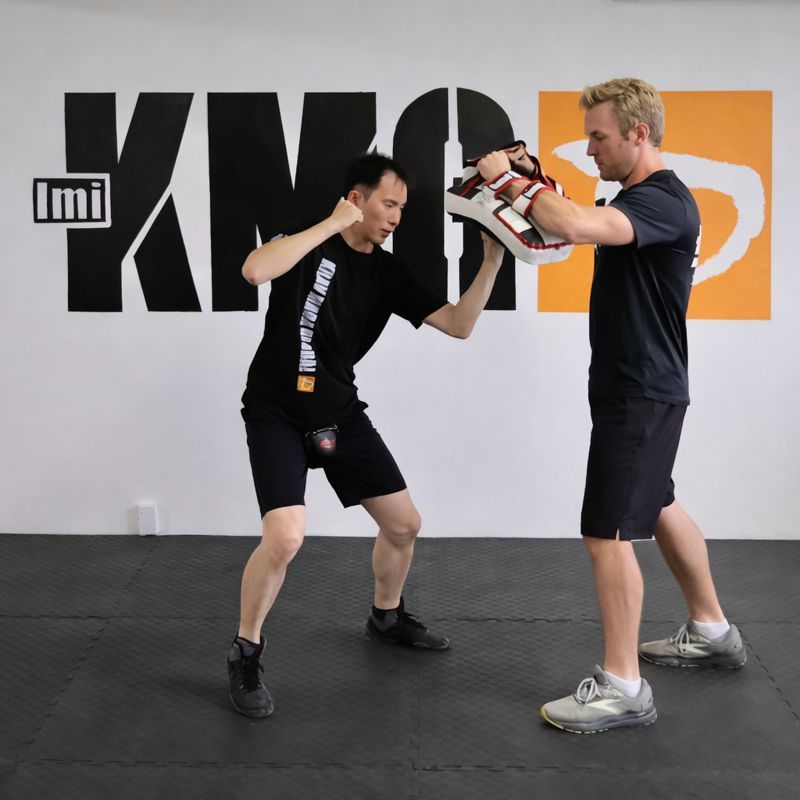
- Targeted Striking: Genuine striking power is developed on professional pads and shields, never on your training partners.
Start Safely in Birkenhead
Experience the professional safety standards at our Birkenhead gym. Even if you've never trained before, we ensure you leave your first session capable and injury-free.
Try a Class on the North ShoreNo experience needed. 47 Birkenhead Ave, North Shore.