What If I Miss a Class — or Can't Train Consistently?
Krav Maga Auckland runs a rolling class format with no fixed syllabus sequence — so missing sessions doesn't set you back the way people expect. Skills build through repetition over time, not through attending every class in order. Inconsistent training is normal, and most students make real progress training once or twice a week.
This is one of the most common things people ask before they start — and it's a fair question. If you've tried other disciplines before, you might have experienced that anxious feeling of missing a few weeks and coming back to find everyone else has moved on without you.
Krav Maga doesn't work that way. Here's why.
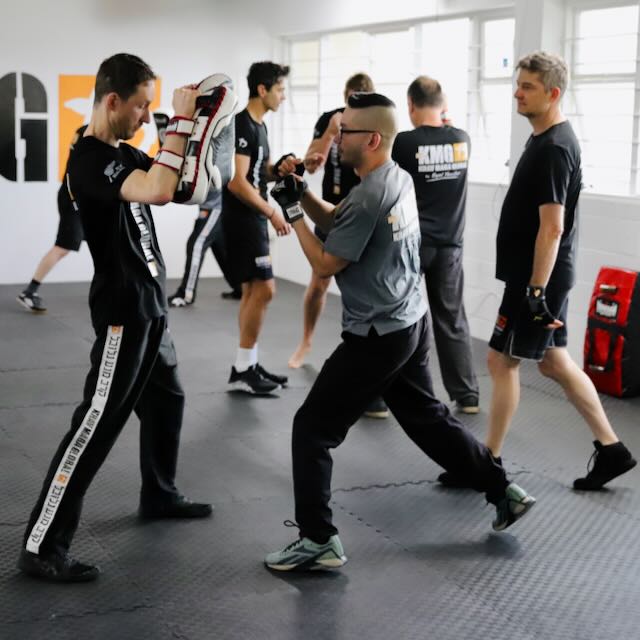
Students training drills at Krav Maga Auckland, Birkenhead.
Why Missing a Class Isn't the Problem You Think It Is
Krav Maga Auckland uses a rolling curriculum — classes don't follow a set weekly sequence that you fall behind on. Each session covers techniques and principles that stand on their own. You're not picking up chapter two before you've finished chapter one. You're building a set of responses through repetition, and every class adds to that, regardless of what you missed in between.
There's also no belt system ticking along without you. Progress in Krav Maga is measured by how your responses have developed — how quickly you react, how instinctively you move, how well you read a situation. Those things build gradually, at your pace, and a missed week doesn't erase them.
Key takeaway: The curriculum is designed for real life — where people have jobs, families, and weeks that don't go to plan.
How Often Do You Actually Need to Train?
Once a week is enough to make genuine progress. It's not the fastest route, but students who train once a week consistently do develop real skills over time. The key word is consistently — showing up most weeks, even if not every week, is what builds the repetitions your nervous system needs to make responses instinctive.
Twice a week is where most students find the sweet spot. Skills start to consolidate faster, the techniques start to feel natural rather than deliberate, and you notice changes in how you carry yourself — not just in training. Three or more sessions per week accelerates that further, but it's the exception rather than the norm for most people at our Birkenhead classes.
"I've been training with Krav Maga Global Auckland for 5 years now and enjoy it as much now as I did when I first started. A fun, friendly environment with great instructors."
— ScottKey takeaway: Once a week works. Twice a week is where most people find their rhythm. More is better, but it's not required.
What Happens When You Come Back After a Break?
You come back, you warm up, and you train. Nobody tracks who was absent last week. The class picks up wherever the current session's focus is, and you slot back in. Students return after holidays, work trips, illness, and family demands all the time — it's part of how training works in the real world.
The practical reality is that your body remembers more than you expect. A few weeks off doesn't mean starting over. You might feel slightly rustier in the first session back, but the underlying patterns are still there. They come back quickly.
Key takeaway: Coming back after a gap is straightforward. The class isn't waiting for you — and that's a good thing.
Does Irregular Training Affect What You Get Out of It?
Yes — frequency affects how quickly skills develop, but it doesn't determine whether they develop at all. Someone training three times a week will progress faster than someone training once a week. That's just how repetition works. But "slower" isn't the same as "not working."
What matters more than frequency is showing up without a long gap between sessions and being present and engaged when you do. A student who trains once a week for two years has done a lot of reps. Those add up.
If you're still figuring out how Krav Maga fits into your schedule, the Essentials Course is a low-commitment way to experience the training before locking in a routine. Most people use it to find their rhythm before committing to regular classes.
Key takeaway: Consistency matters more than frequency. Irregular but sustained beats intense but short-lived.
What If Life Gets Completely in the Way for a Month or More?
It happens — and it's fine. Students take breaks for work, travel, new babies, injuries, and everything else life produces. The training will be there when you get back. Aaron and Brad have seen students return after months away and pick up faster than they expected, because the fundamentals were already there.
The one thing worth doing if you know a gap is coming: don't treat it as a reason not to start. The students who wait until their schedule is "settled" often wait indefinitely. Starting with whatever time you currently have — even once a week — is always better than waiting for a perfect window that may not arrive.
Key takeaway: Start with what you have. An imperfect schedule beats a perfect one you're still waiting for.
Common Questions
What People Ask Before Their First Session
No — Krav Maga Auckland uses a rolling class format, which means there's no fixed sequence of sessions you need to attend in order. Each class is self-contained, and your progress is built through cumulative repetition rather than completing a linear syllabus. Missing a few sessions means fewer reps that week, not a gap in your progression you need to backfill.
Once a week is enough to make real progress at Krav Maga Auckland, as long as you're attending most weeks rather than sporadically. Twice a week is where many students feel skills starting to consolidate more noticeably. Three or more sessions per week is great if your schedule allows, but it's not required — and most students don't train at that frequency.
Not at all — plenty of students at Krav Maga Auckland have irregular schedules and train around travel and work commitments. The rolling format means you can drop back in whenever you're in Auckland without having missed a mandatory session. Because KMA is affiliated with Krav Maga Global, regular travellers can also train at KMG-affiliated schools in other cities or countries and have that experience carry back into their training here.
This is probably the most common reason people delay starting — and in most cases, the perfect window never quite arrives. Starting with whatever time you currently have, even once a week, gets you reps and real skills while you figure the rest out. The Essentials Course at Krav Maga Auckland is a good low-commitment starting point — it gives you a taste of the training without locking you into a full class schedule immediately.
Come back when you can. Students take breaks for travel, family, work pressure, and injury all the time at Krav Maga Auckland — it's a normal part of how real training works over the long term. Most students returning after a gap find they pick up faster than they expected, because the underlying patterns are still there. The training doesn't go anywhere while you're away, and neither does the community.
Krav Maga Auckland · North Shore
Ready to Give It a Go?
Come to a trial class and see how the training fits into your week.
Book a Trial ClassBook a trial class at 47 Birkenhead Avenue, Birkenhead. No experience needed.