What Does "Winning" Actually Mean in Self-Defence?
In self-defence, winning rarely means defeating an attacker. It means increasing your options under pressure — through awareness, de-escalation, and escape — and coming home safely. KMG New Zealand trains this realistic definition of success from the very first session.
Most people arrive at their first self-defence class with a specific image of what success looks like: a clean victory, a decisive technique, the attacker neutralised. It is a compelling picture. It is also, in most real situations, the wrong one.
Real violence is fast, disorienting, and rarely resolved the way it unfolds in film or sport. Understanding what you are actually trying to achieve — and training for that — changes everything about how you prepare.
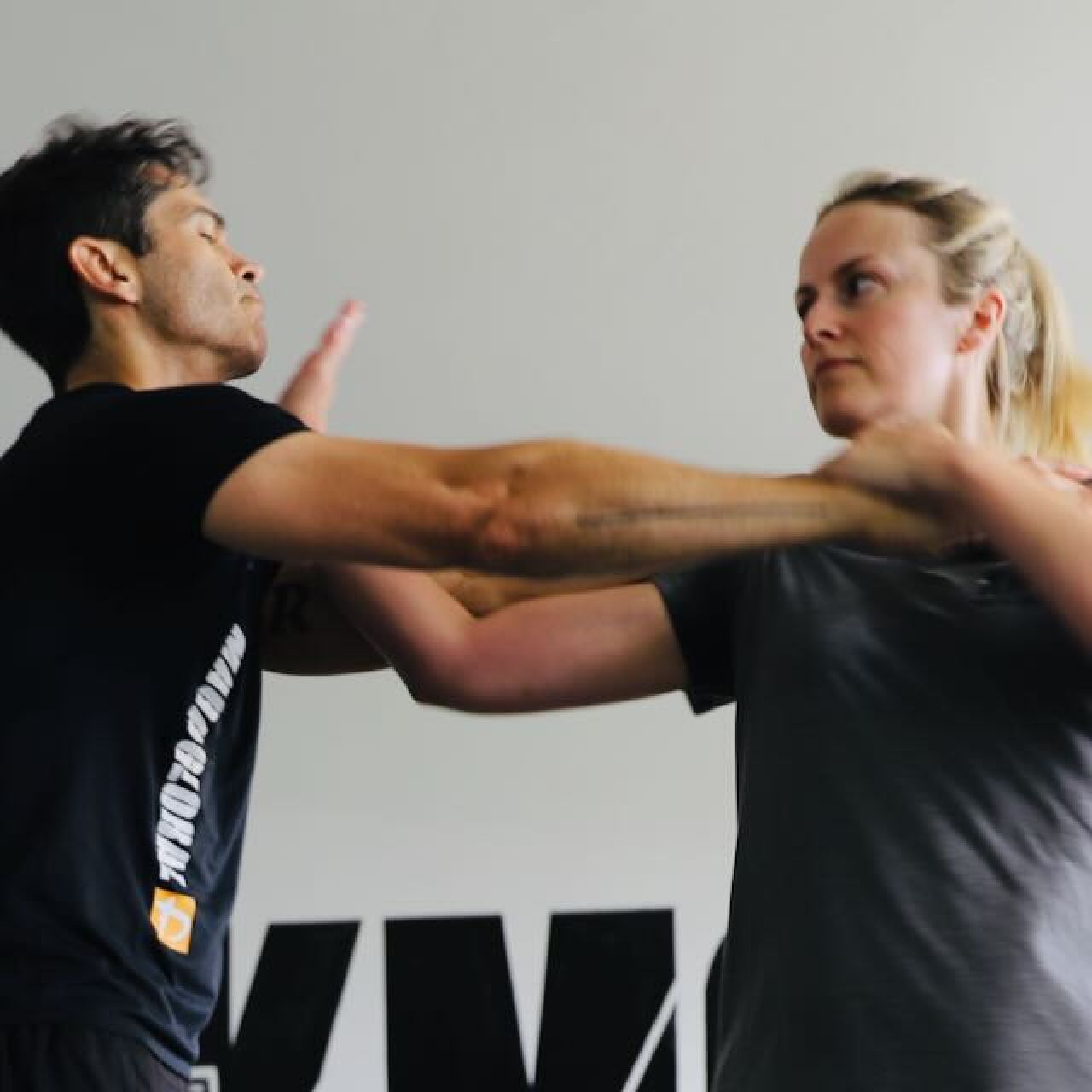
Practical defence under pressure — the kind of situation real self-defence prepares you for.
Why most people start with the wrong definition
The idea that self-defence means overpowering an attacker comes almost entirely from entertainment, not experience. Action films, combat sport highlights, and internet fight clips all share the same editorial logic: they show the decisive moment. The knockout. The clean takedown. The attacker submitting.
What they don't show is everything before — the warning signs that were missed, the moments where leaving was still possible, the micro-decisions that determined how the situation escalated. Those choices are invisible in edited footage. They are the most important part of real self-defence.
The result is a kind of cultural conditioning. Most people entering self-defence training carry an unconscious assumption that their goal is to be capable of defeating someone. That framing feels natural. It is also quietly unhelpful, because it directs attention toward physical performance under ideal conditions — when the actual challenge is functioning under chaos, fear, and constraint.
Key takeaway: the cultural definition of "winning" comes from entertainment, not real-world self-defence. Training that reflects reality produces more capable people.What does real violence actually look like?
Real violence is chaotic, compressed, and governed by adrenaline in ways that no training environment can fully replicate — which is exactly why realistic training matters. Incidents rarely involve a clear opponent, adequate space, or sufficient warning. They often involve ambush, confined environments, bystanders, objects, or multiple people.
Adrenaline changes perception — time distorts, fine motor skills degrade, and the body prioritises survival responses over controlled technique. Tunnel vision reduces peripheral awareness. The emotional weight of the situation — especially when protecting others — is a factor that sport-based training rarely accounts for.
In research on real self-defence encounters, a consistent pattern emerges: people who survive and escape serious harm are rarely those who executed techniques perfectly. They are those who moved fast, created distance, made noise, used their environment, and prioritised escape over engagement.
This is not a discouraging finding. It is a clarifying one. It tells you exactly what to train for.
Key takeaway: real violence involves adrenaline, confusion, and compressed time. Training that prepares you for this reality produces the responses that actually keep you safe.What does winning actually mean?
In real self-defence, winning means coming home safely — and the route to that outcome is rarely a physical victory. Success may look like any of the following, depending on the situation:
- Avoiding the confrontation entirely. Noticing a situation developing early and leaving before it escalates. This is the cleanest outcome — no risk, no harm, no involvement.
- De-escalating the situation. Using posture, voice, and positioning to prevent violence from starting. Effective de-escalation is an underrated skill — it requires presence and confidence, not aggression.
- Creating space and escaping. A well-timed distraction, a burst of movement, a door. Getting away from a situation without serious injury is an unambiguous win.
- Protecting someone else long enough to escape. Shielding a child, a partner, or a stranger and getting them to safety. This is often the real goal, and it changes the decisions you make significantly.
- Surviving the initial assault and creating an opening. When escape isn't immediately possible, disrupting an attack enough to recover — and then escape — is the realistic goal. Not dominance. Not control. An opening.
The KMG curriculum is structured around this hierarchy of responses. Awareness comes first. Avoidance when possible. De-escalation when appropriate. Physical response only when necessary — and with the goal of creating an exit, not proving a point.
Key takeaway: winning in self-defence means coming home safely. Good training makes awareness, avoidance, and escape more accessible — not just physical response.How does good training reflect this?
A self-defence curriculum built around realistic outcomes looks very different from a combat sport programme — and the differences are deliberate. Krav Maga Global was developed specifically to build functional capability in real-world conditions: not ring-sport performance, not tournament technique, not physical dominance for its own sake.
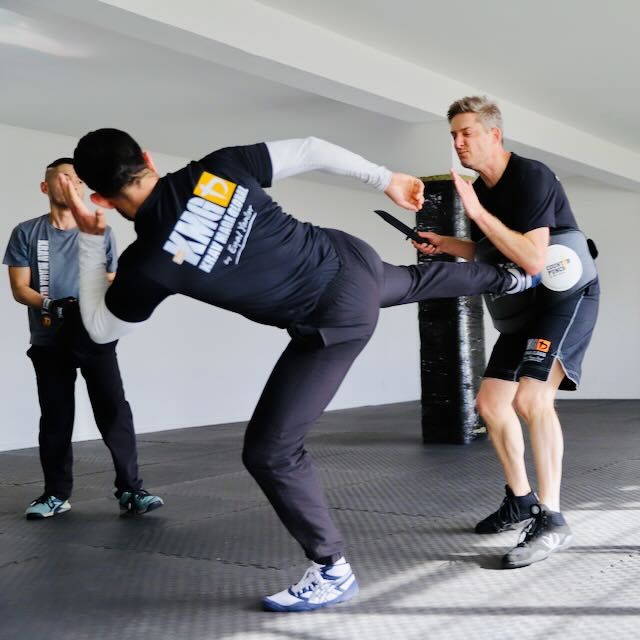
Situational awareness training builds the habit of reading environments early. You learn to notice exits, positioning, behaviour — before anything happens. This is often described as the most practically useful skill that training develops, because it changes how you move through the world day to day.
De-escalation and scenario training builds the ability to make decisions under pressure. What do you say? Where do you move? When do you engage and when do you leave? These decisions happen fast, and they matter far more than which technique you use.
Stress-inoculation drills train the nervous system to function when adrenaline is present. Controlled, escalating pressure — so that the disorientation and urgency of a real event are not entirely unfamiliar. This is the core challenge of practical self-defence training: bridging the gap between calm practice and real conditions.
Legal and ethical awareness matters too. The question of what constitutes reasonable force in New Zealand is not abstract — understanding it changes how you assess situations and how you respond. Excessive force in a self-defence situation carries legal consequences. Good training includes this context.
Key takeaway: a curriculum built around realistic outcomes prioritises awareness, decision-making, and stress tolerance — not technique perfection.How training changes your definition of success
One of the most consistent things experienced practitioners describe is a gradual shift in what they are trying to achieve — from wanting to be able to defeat someone, to wanting to ensure that people they care about get home safely.
That shift is not just psychological. It changes the decisions you make in training. You become more interested in positioning than in power. More interested in exits than in control. More interested in composure under pressure than in aggressive response.
Beginners often describe being surprised by this. They expected to learn to fight. They found themselves becoming more calm, more observant, and — quietly — more confident in unfamiliar situations. Not because they became more dangerous, but because they became more capable of reading situations and acting without panic.
The most experienced practitioners — including those who have trained under Eyal Yanilov's KMG framework for many years — often frame their understanding of success in the simplest possible terms: everyone I care about got home safely. That is the goal. Everything else is in service of it.
Key takeaway: training changes your relationship with conflict. Experienced practitioners care less about performance and more about outcomes — which produces calmer, more effective responses.Frequently asked questions
No — in fact, the opposite tends to be true. Confidence reduces the likelihood of conflict. People who are visibly anxious or uncertain about their ability to handle pressure can be more vulnerable to confrontation. Training builds composure and situational awareness, which means people handle tense situations more calmly and exit them more effectively — without escalating.
Freezing is a normal physiological response to sudden threat — the nervous system's way of processing unexpected danger. Good training reduces the freeze response through stress-inoculation drills that gradually expose you to pressure in a controlled environment. You won't eliminate the adrenaline response, but you can train your nervous system to process it and act rather than lock up.
Not at all — escaping safely is often the best possible outcome. It means no injury, no legal consequences, and no escalation. In KMG training, avoidance and escape are treated as the primary goals, not fallback options. A physical response is trained for when those options are not available, not as a first preference.
Combat sports are built around performance within rules, inside a controlled environment, against a prepared opponent. Self-defence operates in the opposite conditions — ambush, chaos, unknown threats, no rules, and real consequences. The KMG system is designed for the second scenario, which means the curriculum, the scenarios, and the definition of success are all different. Read more in Best Martial Art for Self-Defence.
No. The KMG curriculum is built on principles that work regardless of size, strength, or athletic background — because real threats don't match opponents by category. Awareness, positioning, and the ability to act under pressure matter far more than physical attributes. Beginners of all fitness levels train at KMG clubs across New Zealand.
KMG New Zealand has active clubs in Auckland and Hawke's Bay, with interest lists open for Wellington, Christchurch, Hamilton, Tauranga, and other cities. All clubs run under the same internationally certified KMG standard. See the national locations hub to find training near you or register your interest for a city that's coming soon.
Find Training Near You
Active clubs in Auckland and Hastings. Waitlist registration available across New Zealand.